Why Hire a Direct-Service Mover (Not a Broker) — 2026 Guide
Direct-service mover vs household goods broker: why the distinction matters for damage rate, delivery window, and accountability on your move.
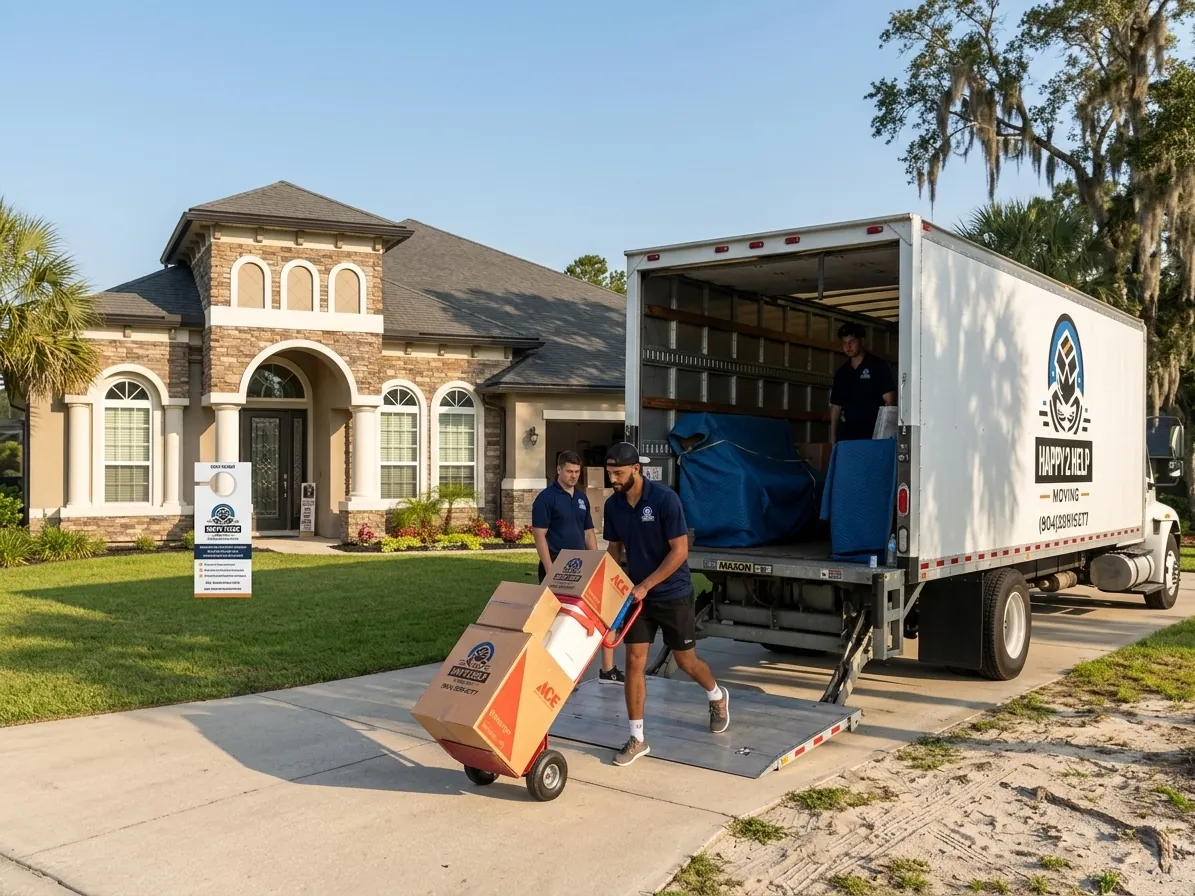
The category most customers don’t know exists
When you search for a moving company online in 2026, the top organic and paid results are a mix of two completely different business types: direct-service movers (real moving companies that own trucks and employ crews) and moving brokers (sales operations that resell your move to whichever carrier they can sign up cheapest).
The distinction is invisible to most customers. Both have professional websites. Both have customer reviews. Both quote prices. Both promise excellent service. The difference shows up on move day — and especially on delivery day for interstate moves — when it’s too late to do anything about it.
This guide explains the difference, the structural reasons it matters, how to tell which one you’re hiring, and why H2H Moving operates as a direct-service operation by deliberate choice. Our framing is simple: “your goods on our truck, not consolidated.”
What each category actually does
Direct-service mover
- Owns the trucks, equipment, packing materials
- Employs the crews — W-2 employees in most cases, sometimes 1099 contractors who work consistently with the company
- Holds the operating authority (FDACS for intrastate Florida, FMCSA / MC for interstate)
- Performs the physical move from origin to destination
- Carries the insurance — cargo and liability — that pays claims
- Is named on the bill of lading as the carrier
Moving broker
- Doesn’t own trucks or employ crews
- Sells moves to customers, then subcontracts to a carrier
- Holds broker authority (different FMCSA registration from carrier authority)
- Coordinates but doesn’t physically perform the move
- The actual carrier may not be identified at booking — often assigned days before move day
- Insurance and accountability flow through the broker, then to the carrier — fragmenting the chain
Both are legal. Both are regulated. FMCSA explicitly requires brokers to disclose broker status. The problem is most customers don’t ask, don’t notice the disclosure, and don’t understand the implications until move day.
The structural reasons direct-service is lower-risk
1. Consolidation logic
Brokers maximize truck utilization by consolidating multiple customer shipments onto a single tractor-trailer. Your 8,000 pounds of household goods plus three other customers’ shipments fills a tractor-trailer headed roughly in the right direction.
Practically:
- Your goods are loaded, unloaded, and reloaded at consolidation warehouses
- Delivery window stretches because the truck routes through multiple destinations
- Each transfer is a damage opportunity
- Delivery dates are ranges (7-14 days, sometimes 21 days) because the truck waits to fill or to align destination clusters
Direct-service movers can also do interstate work without consolidation — single-load, single-crew, three-to-four day delivery for an 800-mile move. The job costs more. The risk profile is dramatically lower.
2. Accountability dilution
When something goes wrong on a brokered move:
- The broker says “we’re not the carrier, contact them”
- The carrier says “we performed per the contract, contact the broker”
- The bill of lading is sometimes ambiguous about who’s responsible
- The insurance chain has multiple steps
- Resolution timelines stretch
With a direct-service mover, you have one company, one insurance policy, one accountability chain. Damage claims resolve faster.
3. Race-to-the-bottom pricing on the carrier side
Brokers compete on price. They drive carrier rates down to maintain margin. The lowest-paying loads attract the lowest-quality carriers. Drivers and crews working at break-even rates have less margin to invest in equipment, training, or quality.
Direct-service movers control the entire revenue chain — what the customer pays is what funds the truck, the crew, the equipment, the insurance, the training. The economic incentive aligns with quality.
4. Crew consistency
A direct-service mover’s crew today is likely the same crew that performed yesterday’s moves. They know the routes, the truck, the standard equipment, the company protocols. A brokered carrier may be new to that broker’s customer base, working with unfamiliar inventory documentation, and operating under contract terms they didn’t directly negotiate.
How to tell which one you’re hiring
Three checks before signing:
1. FMCSA SAFER lookup
Go to safer.fmcsa.dot.gov. Search the company name. Look at operating authority:
- Common carrier authority for household goods = direct-service interstate mover
- Property broker authority = broker
- Both = company operates as both, depending on the job
Authority type is listed explicitly. Five-minute check.
2. Direct question
Ask: “Are you the carrier that will physically perform my move, or do you broker to other carriers?”
A direct-service mover answers yes — clearly and without hedging — and can identify the truck and crew that will perform the job.
A broker will often hedge: “We work with a network of carriers,” “We coordinate the move with our partner carriers,” “Our crews are vetted from our carrier base.” All of these are broker tells.
3. Bill of lading review
Direct-service movers list their company specifically on the bill of lading as the carrier. The name on the truck, the name on the bill, the name on the website all match.
Brokered shipments often have a broker name plus a separate carrier name that may not be filled in until move day. If your quote or contract leaves the carrier name blank or says “TBD” or “to be assigned,” you’re hiring a broker.
When a broker might be the right choice
Brokers aren’t fraud by default — they’re legal regulated businesses with a legitimate place in the market. A broker may be the right choice if:
- You need a specific origin-destination corridor that direct-service operators don’t cover
- Budget is constrained and you accept the consolidation and damage-rate trade
- You have very few goods and a flexible delivery window
- You’re moving items that aren’t valuable or sentimental
For most household goods moves — especially for households with valuable contents, time pressure, or sentimental items — direct-service is the structurally better choice. The price premium is real but proportionate to the risk reduction.
Common broker red flags
Beyond formal broker status, watch for:
- Quote came in dramatically lower than direct-service peer quotes. Often a bait-and-switch precursor.
- Pressure to book immediately (“price goes up tomorrow,” “we only have one slot left”).
- Large deposit required at booking — often non-refundable. Direct-service movers typically take small or no deposits.
- Phone-only quote with no inventory walk. Direct-service operators insist on a real inventory.
- No physical local address for the company headquarters.
- Carrier name not identified at booking — confirmed only days before move day.
- Delivery window quoted as a range longer than the actual transit time (e.g., 14-day window on a 3-day move).
- Customer service reps who don’t know which truck or crew is assigned to your job until the day before.
Any combination of two or more is a flag. All seven in one quote is a guaranteed broker.
What H2H Moving does (direct-service, every move)
H2H Moving operates as a direct-service mover by design:
- We own our trucks
- We employ our crews
- We hold our operating authority for intrastate Florida (FDACS registration) and interstate (when MC authority issues)
- We perform every move we book — we don’t broker work out
- We don’t accept brokered work into our schedule
- The bill of lading on every H2H move names H2H Moving as the carrier
- We carry our own cargo and liability insurance
For intrastate Florida jobs, verify our active FDACS registration at fdacs.gov/Business-Services/Movers. For interstate work, our operating authority will be listed at safer.fmcsa.dot.gov once issued — we don’t claim authority we haven’t been granted.
For Northeast Florida moves (intrastate or interstate outbound to Nashville, Houston, Charleston, or any other destination), the H2H crew that quotes the job is the H2H crew that performs the job. Single accountability chain.
Call (904) 209-9277 or request an estimate online. We serve St. Johns County, Duval County, and the broader Northeast Florida region.
Related reading: Why hire a licensed Florida moving company · Cost to move in Northeast Florida 2026 · Jacksonville to Nashville guide · Jacksonville to Houston guide · Long-distance moving hub
Frequently Asked Questions
What's the difference between a moving company and a moving broker? add
A moving company physically performs the move — owns trucks, employs crews, holds operating authority, takes responsibility for damage. A moving broker is a sales operation that sells you a move and then subcontracts the actual work to a carrier you may not know in advance. Brokers are legal and disclosed (FMCSA requires brokers to register and disclose broker status), but the distinction matters because brokers don't physically handle your goods, don't employ the crew, and frequently provide less accountability when something goes wrong. Direct-service movers do all three. The trade-off is that direct-service movers are often more expensive per job but have lower damage rates, shorter delivery windows, and single-point accountability.
How do I know if I'm hiring a broker or a direct-service mover? add
Three checks. First, look up the company at safer.fmcsa.dot.gov — broker status is listed explicitly under operating authority. Second, ask directly: 'Are you the carrier that will physically perform my move, or do you broker to other carriers?' A direct-service mover answers yes immediately. A broker may hedge ('we work with carriers' or 'we coordinate the move'). Third, examine the quote document — direct-service movers list their company on the bill of lading; brokers list their broker name plus a separate carrier name that may not be assigned until move day. If your quote document doesn't name the carrier specifically, you're hiring a broker.
Why do brokered moves have higher damage rates? add
Three structural reasons. First, consolidation: brokers commonly consolidate multiple customer shipments onto a single tractor-trailer to maximize truck utilization — your goods are loaded, unloaded, and reloaded multiple times during routing. Each transfer is a damage opportunity. Second, accountability dilution: the broker isn't physically handling your goods, the carrier may not have a long-term relationship with the broker, and crew quality varies. Third, race-to-the-bottom pricing: brokers compete on price, drive carrier rates down, and the lowest-paying loads attract the lowest-quality carriers. Direct-service movers control the entire chain — one truck, one crew, one accountability point. Damage rates run notably lower.
Are all interstate moves with consolidation brokered? add
No, but most consolidated shipments come through brokers. A direct-service interstate mover can also consolidate if it serves multiple customers along a corridor — but a reputable direct-service operator discloses consolidation explicitly during the estimate, gives you the delivery window range, and lets you opt for a non-consolidated dedicated load at a higher cost. The pattern with brokers is that consolidation is often the default without explicit disclosure, and the delivery window stretches longer because the broker is trying to fill the truck before dispatch. For high-value moves, dedicated non-consolidated loads are worth the premium.
Is H2H Moving a direct-service mover or a broker? add
H2H Moving is a direct-service mover. We own our trucks, employ our crews, hold our own operating authority for intrastate Florida moves, and physically perform every job we book. We don't broker work out to other carriers, and we don't accept brokered work into our schedule. The bill of lading on every H2H move names H2H Moving as the carrier — verifiable at fdacs.gov/Business-Services/Movers for Florida intrastate jobs. For interstate moves, our crew loads the truck in Northeast Florida and our crew delivers at destination — no consolidation, no transfers, no swap-out to an unknown carrier on move day.
Planning a move? Talk to a real person.
Happy 2 Help Moving is locally owned and owner-operated by Devin Vangel in St. Augustine, FL. Free quotes, no pressure.
Get a Free Quote arrow_forwardor call (904) 209-9277